

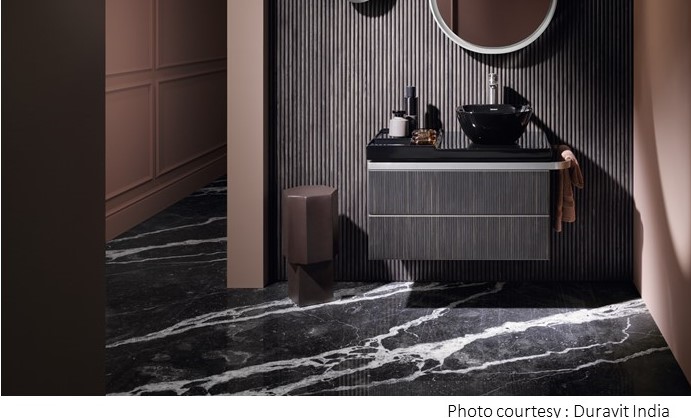
The Material Evolution of Vanity Units
Indian vanity units have transformed from basic wooden designs to modular, sustainable, and tech-integrated systems, shaped by global influence, material science, urbanisation, and changing perceptions of luxury and wellness.
Vanity units, a central fixture in modern bathrooms, have undergone a remarkable transformation over time, reflecting the shifting priorities and innovations in both furniture design and human experience. What first started out as purely utilitarian systems has today transformed into smart systems driven by advancing material science, changing lifestyles, and refined aesthetic sensibilities
The Progression of Vanity Units
Between the 1990s and 2000s, vanity units in India were designed more from a utilitarian point of view than aesthetic appeal. Stripped down to the absolute basics, vanities largely featured only a washbasin, mirror and lighting.
Behzad Kharas, Chairman and Managing Director, The BNK Group, says, “This period was dominated by ornate and traditional styles where vanities were heavy with bulk and ornamentation, involving carved wood and detailed mouldings. Built-in cabinetry wasn’t common; instead, there were freestanding cabinets or pedestal basins. Countertops were rendered mostly in tile or plain stone, and under-sink storage was basic.” He further adds that even the colours used were conservative, with lots of browns, off-whites and pastels dominating the palette. “This was the case owing to the scant exposure to global design trends, which meant fewer experiments and designers resorting to local materials and limited finishes, like wood and laminates and simple stones and basic chrome or brass finishes for hardware.”
However, with rising incomes, accelerated urbanisation and larger exposure via media and the internet, the 2010s marked a pivotal transition period for vanity design. “This drove changes like modular vanities and prefabricated and modular units with better finishes. Cabinets were designed to be more precise, smoother and more compact, and there was a greater mix of materials that comprised engineered stone, better laminates and veneers,” shares Kharas. Moreover, this period witnessed better use of vertical space even as urban bathrooms remained small and compact. Floating/wall-hung vanities were introduced with the intention to save floor space, making it easier to clean and maintain, and providing an overall lighter visual feel. Kharas adds, “Storage saw an improvement, too, with better utility – drawers instead of cupboards – and emphasis on hidden storage.”
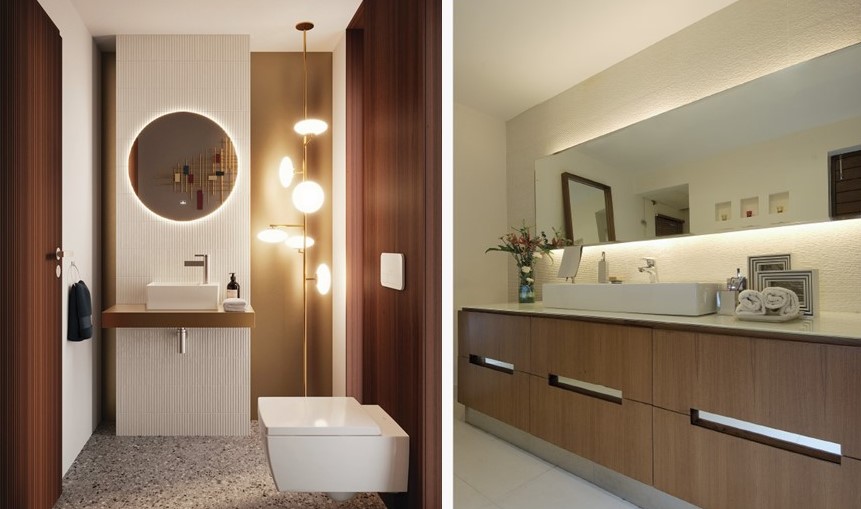
This shift also marked the emergence of minimalism – defined by cleaner lines and less clutter, which users often attributed to luxury. “The ‘luxury’ look increasingly meant simplicity rather than ornamentation,” opines Kharas, further adding, “Hardware and finishes saw an improvement with brushed metals, better chrome plating, better hinges and drawer slides. Designers also began paying more attention to mirrors, incorporating different mirror shapes and sizes as well as focusing on lighting, evident in the integration of backlit mirrors and LED lighting around mirrors.” At present, Indian vanity design is strongly influenced by the latest global trends. “These aren’t just aesthetic changes but also how vanities are built— the materials used and what functions are expected. Today, there’s an increase in demand for natural materials and textures, like warm wood, stone or stone-look countertops. Even the colour palette has shifted to earthy tones, like sand, terracotta and muted greens,” shares Kharas.
Behzad Kharas
Chairman & MD , The BNK Group
“The period between 1990’s & 2000’s was dominated by ornate and traditional styles where vanities were heavy with bulk and ornamentation, involving carved wood and detailed mouldings”
Material Choices: Driving Factors
Today, bathrooms are becoming extensions of personal style as well as being transformed into wellness zones or self-care sanctuaries. Commenting on this, Vivek Gupta, Principal Architect, Arvind Vivek and Associates, says, “Our conventional understanding of space has changed. Previously a stronghold of communal living, the Indian home, today, views personal areas, including the bathroom, as a private haven. So, the vanity is now used for more than just handwashing; it is a place for grooming and reflection. This has increased demand for materials that have a calming, intimate feel, such as cold, flawless solid surfaces or tactile surfaces.” There are quite a few driving factors that go into selecting materials for bathroom vanities – design, functionality, sustainability, and cost are just a few. However, Kharas points out that the weight of each factor is varied, depending on contexts like urban vs. rural, budget vs. luxury, etc.
“Today’s contemporary tastes favour minimalism and natural finishes, like matte woodgrain laminates and stone-look surfaces. There’s also been a rise in custom finishes, like fluted panels, matte black, and brushed brass, which has pushed demand for newer materials like engineered wood, MDF with PU coatings, and acrylics. These preferences can be attributed to the increasing consumption of global design trends through avenues like social media, design TV shows, and travel, which have opened Indians to global bathroom aesthetics, generating a demand for vanities that look not only modern but luxurious despite the size of the space. This impact has encouraged designers to explore engineered materials like HPL, PVC boards, and quartz, which offer high design flexibility at a range of price points,” observes Kharas.
Nazario Menezes, Country Manager – India and Subcontinent, Villeroy & Boch, emphasises that wood creates a sense of comfort at the vanity unit and a calm, natural atmosphere. “With its gentle tones, warm feel, and unique grain, it instantly brings a homely vibe and invites relaxation and well-being. In our Antao bathroom collection, real wood in the furniture provides this natural feeling. Personal needs and preferences are just as important as the spatial conditions. The furniture should be perfectly matched in design to the ceramic elements in the bathroom, while also being functional and sustainable.”
Gupta highlights a rise in customisation and modular vanity designs and how they influence material selection, “The one-size-fits-all strategy is outdated. Personalisation is made possible by modular designs, which necessitate material flexibility. In the projects I’ve been working on, we’ve switched from large, solid wood to engineered panels because they can be cut, sculpted, and finished in a thousand different ways, making it possible to make vanities that elegantly and precisely fit into even the most problematic places.” Despite the reigning role of aesthetics today, designers are equally focused on the vanity materials’ functionality and practical use, especially considering the high-moisture environment of Indian bathrooms.
Elaborating on this, Kharas says, “Bathrooms are high-moisture zones, where materials must resist water, heat, and daily wear. Previously, traditional materials, like untreated wood, were prone to warping or swelling. Today, we see a shift towards PVC boards that are 100% waterproof, WPC (wood plastic composite), which is resistant to rot and pests, and marine plywood with laminate for better water tolerance. For countertops, quartz and solid surfaces have gained popularity owing to their durability. Sustainability, too, has been seeing a growing interest, especially in metro cities and among younger homeowners. I’ve had clients enquire about toxin-free materials, recycled materials or long-lasting, low-maintenance options to reduce waste.” Gupta agrees, “The conversation has moved from a whisper to a clear request. I’m seeing clients, particularly the younger generation, ask about recycled materials, low-VOC finishes, and certified sustainable wood. It’s a sign of a maturing market, where a home’s story includes its impact on the planet.”
For Megha Dave, Architect and Design Head, Drench, the idea of sustainability often translates to quality. “Clients aren’t just asking for ‘green’; they’re specifically asking for solutions to real-world problems, like incorporating faucets and showerheads with aerators and dual-flush or reduced-flush toilets. They’re also choosing high-quality, durable materials and fittings with longer warranties, as they view constant replacements as both an environmental and financial waste. Moreover, there’s been a growing inquiry into low- or no-VOC paints, sealants, and adhesives to ensure better indoor air quality, making the bathroom a healthier space.”
Smart technology integration is another driving factor that has reshaped how designers, manufacturers, and homeowners think about vanity materials and finishes. “Beyond aesthetics, smart technology influences the core functionality, compatibility, and even construction techniques of bathroom vanities. These smart vanities may include backlit mirrors or LED strips, motion sensor lights, touch-activated surfaces, integrated de-misters in mirrors, charging ports, or even Bluetooth speakers,” shares Kharas. Ultimately, with rising disposable income and value sensitivity, people are willing to spend more as long as they receive value for their money. “There’s a demand for premium looks without any unnecessary maintenance,” adds Kharas.
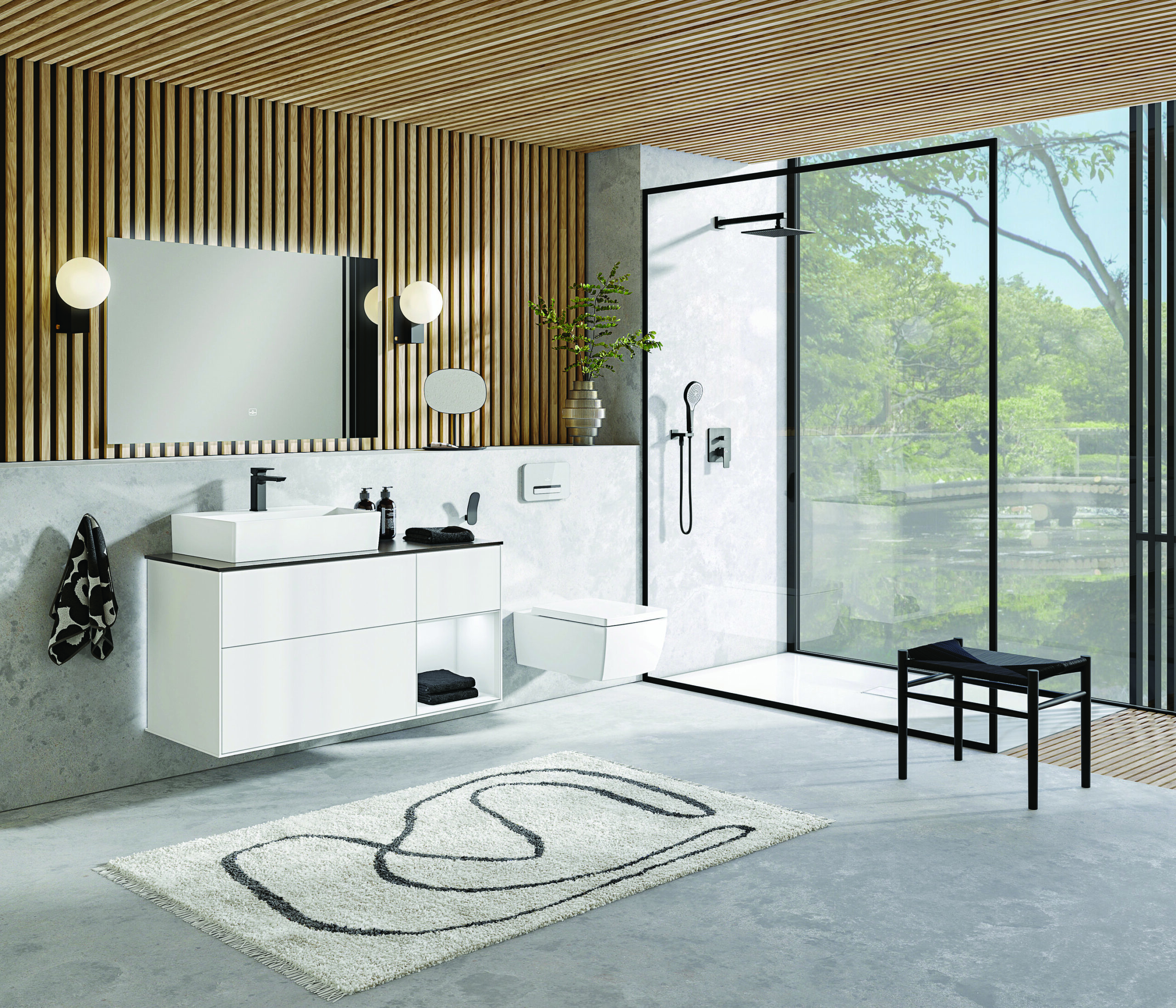
Material Selection within the Indian Context
Indian bathrooms, especially in typical middle-income homes, face heavy daily use, water exposure, and temperature/humidity fluctuations that many Western designs don’t always account for. So, when selecting materials for Indian bathroom vanities, designers need to take certain factors into consideration. For starters, the materials used should be water- and moisture-resistant since Indian bathrooms are often wet zones, with many homes still using buckets, mugs or hand showers, resulting in the floor and even parts of the vanity continuing to be regularly wet. The materials should also be tolerant to heat and humidity so that there’s no degradation of finishes. Fixtures, too, must be durable under daily use, considering the heavy footfall that bathrooms receive in homes with multiple family members.
When choosing wood for the bathroom, it’s important to select types that can handle moisture well and visually suit the bathroom. “Harder woods, such as oak or walnut, are suitable for washbasins and showers. Surfaces and coatings with a wood look can also be a good compromise between durability and design. Villeroy & Boch offers wood as a material for bathroom furniture. The furniture range includes a wide selection of vanity units, consoles, and complementary furniture such as highboards, tall cabinets, sideboards, and mid-height cabinets,” shares Menezes.
Vivek Gupta
Principal Architect Arvind Vivek and Associates
“The one-size-fits-all strategy is outdated. Personalisation is made possible by modular designs, which necessitate material flexibility.”
“Since hygiene is prioritised highly in Indian homes, the materials used for vanities should be low-maintenance, easy to clean with wipes, not stain easily, and not require special products. The materials should also be pest and fungus-resistant, given that Indian bathrooms are high in moisture or sometimes even poorly ventilated,” opines Kharas.
Duravit has already made headway in this direction. Speaking about it, Sahyog Bharti Pandita, Managing Director, Duravit India, says, “We are working with advanced materials like satin matt and super matt surfaces featuring anti-fingerprint coatings, making them remarkably easy to clean and maintain. A unique benefit of these finishes is their self-healing effect – small scratches virtually disappear on their own, preserving the elegance of the vanity for years to come.”
Influence of Global Design Trends
What was once a niche phenomenon, today, imported materials and global design trends have become mainstream and dominate how bathroom vanities are thought of and designed, especially in urban, aspirational, and premium market segments.
Dave highlights, “The influence of imported materials and global design trends is profound and dualistic. It dictates the aspiration while simultaneously compelling the domestic industry to innovate and compete. For instance, global exposure brings in preferences for finishes and colours in faucets and accessories, which, in turn, influences the colour and texture choices for vanity tops and cabinets, leading to an altered choice in materials that complement a sophisticated palette.”
Kharas adds, “Imported materials like Italian marble, Spanish tiles, German laminates, Austrian hardware, and solid surfaces (e.g., Corian) are associated with luxury, prestige, and refined taste. Even when clients can’t afford these, they ask for Indian or engineered alternatives that mimic the same look with equivalents like quartz, PU finishes, acrylics and wood veneers – all imitating imported looks. Moreover, today, there is far greater supply chain access and global brands in India, like Kohler, Grohe, Villeroy & Boch, Duravit, etc. Manufacturers now offer imported raw materials, like acrylic sheets from Korea and quartz slabs from Vietnam and China, in their local products. This makes it easier and more affordable to integrate global material styles into Indian bathrooms.”

Megha Dave
Architect & Design Head, Drench
” Global Exposure brings in preferences for finishes and colurs in faucets and accessories, which, in turn, influences the colour and texture choices for vanity tops and cabinets”
The Road Ahead
Kharas believes that in the next 5-10 years, bathroom vanity design in India will be defined by materials that balance durability, aesthetics, sustainability, and smart functionality. He chalks out the top five likely dominant materials to include WPC board (waterproof, strong, modular-friendly), marine ply + HPL laminate (affordable, adaptable), acrylic/PU-coated MDF (aesthetic appeal, durable, increasingly available), engineered quartz (premium, low-maintenance countertop options), and fluted/textured MDF or WPC (design-driven, statement finishes for vanity fronts).
These material choices are based on current trends that he sees continuing in the coming decade – urbanisation and compact homes (usage of lightweight, modular, wall-mountable materials like WPC and MDF), aesthetics influenced by Instagram culture (high-finish materials like acrylic, PU, quartz, and fluted panels), water usage and humidity in Indian bathrooms (waterproof boards like WPC and marine ply becoming a standard), adoption of smart bathrooms and tech (materials that support LEDs, sensor taps, wiring, and precision cutouts), and eco-consciousness among consumers (preference for sustainable or recycled materials).
Box

Nazario Menezes
Country Manager, India & Subcontinent, Villeroy & Boch
“With wood’s gentle tones, warm feel, and unique grain, it instantly brings a homely vibe and invites relaxation and well-being. In our Antao bathroom collection, earl wood in the furniture provides this natural feeling”
Pandita talks about how Duravit has seen glass emerge as an innovative material. “In our Vitrium series, designer Christian Werner introduced glass as a key design element where he used it on the front of the vanity, allowing the toiletries inside to remain visible. It’s a bold, transparent approach that celebrates everyday objects. However, what really elevates this design is the integrated LED lighting within the vanity, casting a warm, ambient glow that gives the piece a fireplace-like effect. This interplay of transparency, reflection, and light creates a striking aesthetic that resonates deeply with both designers and end users.”
For Gupta, next-generation composites and engineered materials will likely dominate. “We will witness materials that are bioluminescent or self-healing in addition to being visually appealing and functional. The distinction between man-made and nature will become increasingly hazy. I also anticipate a return to tactile, honest materials like honed stone, lime plaster, and terrazzo in creative, understated ways.”

“We are working with advanced materials like satin matt surfaces featuring anti-fingerprint coatings, making them remarkable easy to clean and maintain.”
Tags: Bathroom Design, Bathroom furniture, Bathroom Interiors, Behzad Kharas, Material Finish, Megha Dave, Vanity Units, Vivek Gupta